


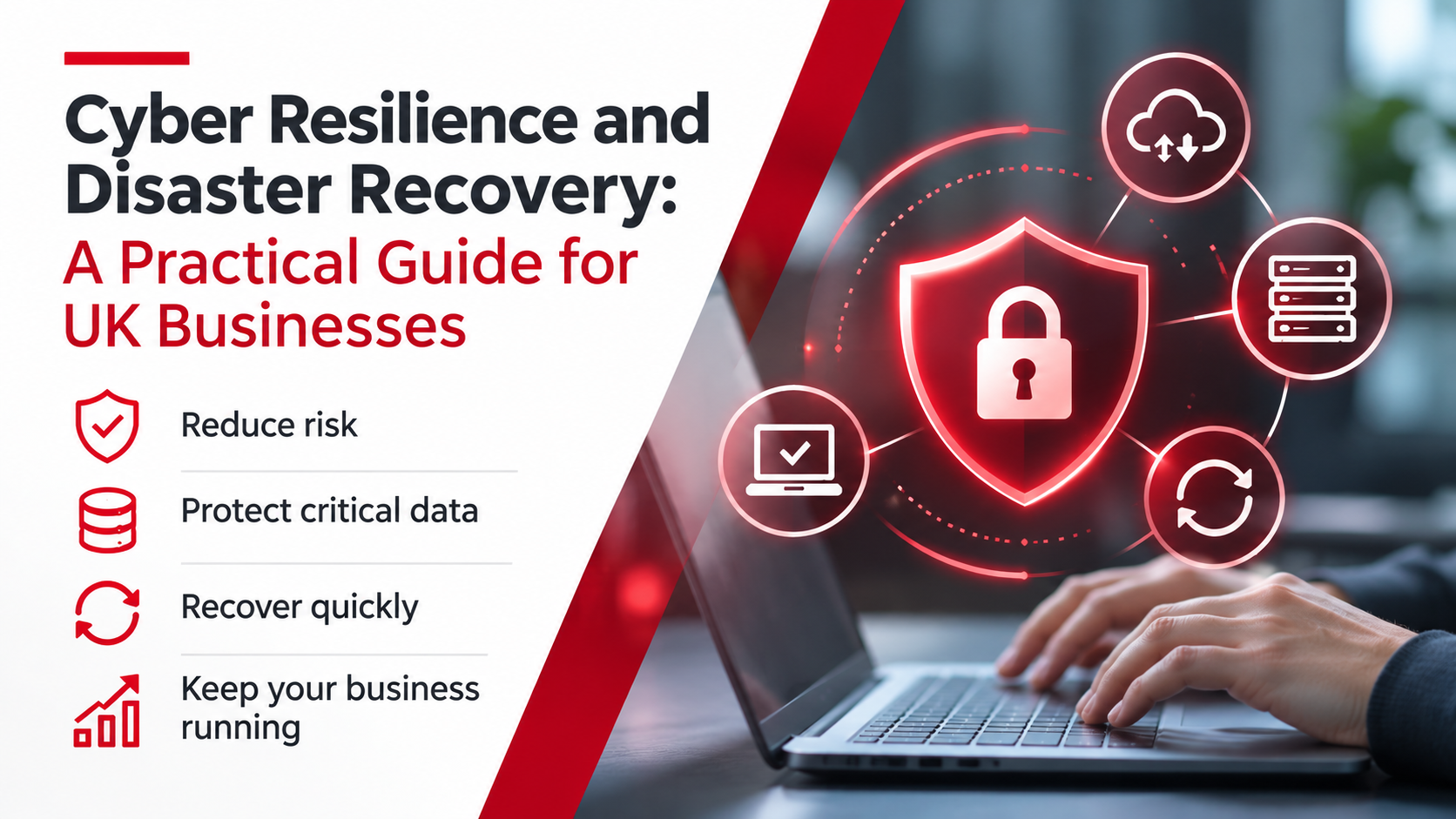
Cyber Resilience and Disaster Recovery: A Practical Guide for UK Businesses
Protecting your business from cyber threats is about more than preventing an attack. It is about ensuring your systems, data and operations can recover quickly when something goes wrong.
Datanet News
Date:
30/07/2026
Summary:
Discover practical steps to strengthen your business’s cyber resilience, protect critical data and minimise downtime through effective disaster recovery planning, secure hosting and offsite backups.
#datanetnews

Cyber Resilience and Disaster Recovery: A Practical Guide for UK Businesses
Cyberattacks, hardware failures, power disruptions and human error can all affect business-critical systems. While cybersecurity remains a priority, having an effective disaster recovery strategy is just as important. For businesses relying on digital services, even a short period of downtime can result in lost revenue, reduced productivity and reputational damage. So, what practical steps can businesses take to improve their resilience?
Cybersecurity, Cyber Resilience and Disaster Recovery: What’s the Difference?
Although closely connected, these three areas serve different purposes.
- Cybersecurity focuses on protecting systems, networks and data from cyber threats.
- Cyber resilience considers how a business can withstand and recover from an incident while maintaining essential operations.
- Disaster recovery (DR) focuses on restoring IT systems, applications and data following an outage or disruption.
An effective business continuity strategy combines all three, helping organisations prepare for incidents rather than simply reacting when something goes wrong.
1. Identify Your Business-Critical Systems
The first step is understanding which systems your business cannot afford to lose. Customer databases, financial applications, websites, email and internal networks may all be essential to daily operations. Businesses should establish two important recovery targets:
- Recovery Time Objective (RTO): How quickly must a system be restored following an outage?
- Recovery Point Objective (RPO): How much data can the business afford to lose, measured in time?
Understanding these requirements helps determine the most appropriate backup, hosting and disaster recovery solutions.
2. Make Backups a Priority
Regular backups are essential, but simply having a backup does not guarantee successful recovery. The widely recommended 3-2-1 backup strategy involves keeping three copies of important data, using two different storage devices or media, with at least one copy stored offsite. For additional protection against ransomware, businesses should also consider immutable or appropriately isolated backups that cannot easily be altered or deleted during an attack. Importantly, backups should be tested regularly to ensure data can be restored when needed.
3. Consider Offsite Hosting and Disaster Recovery
Hosting all your IT infrastructure and backups in one location creates additional risks. A power failure, fire, flood or security incident could potentially affect multiple systems simultaneously. Using a professional data centre can help businesses separate critical infrastructure from their primary premises while benefiting from:
- Physical security: Controlled access and continuous monitoring.
- Resilient infrastructure: Specialist power and cooling systems.
- Reliable connectivity: Access to business-grade network services.
- Geographical separation: Reduced dependence on a single location.
- Scalability: Flexibility to accommodate changing infrastructure requirements.
At Datanet, our colocation services at the secure ARK Farnborough Data Centre provide businesses with access to purpose-built infrastructure without the cost of operating their own data centre.
4. Develop and Test Your Disaster Recovery Plan
A disaster recovery plan should clearly outline how your business will respond when critical systems become unavailable. It should identify who is responsible for managing an incident, which systems need restoring first and how employees and customers will be kept informed. However, a recovery plan is only effective if it works in practice. Regular testing helps identify weaknesses, confirm that backups can be restored and establish how long recovery is likely to take. The UK’s National Cyber Security Centre (NCSC) offers practical guidance and its free Exercise in a Box resource to help organisations test their response to cyber incidents.
5. Review Your Hosting and Connectivity
Cyber resilience is not solely about firewalls, software and backups. The underlying infrastructure supporting your business is equally important. Ageing hardware, unreliable connectivity or servers hosted in unsuitable environments can introduce unnecessary risks. Moving critical infrastructure into a specialist data centre can provide greater reliability, security and flexibility, allowing businesses to focus on their operations rather than maintaining their own facilities.

How Datanet Can Support Your Business Resilience Strategy
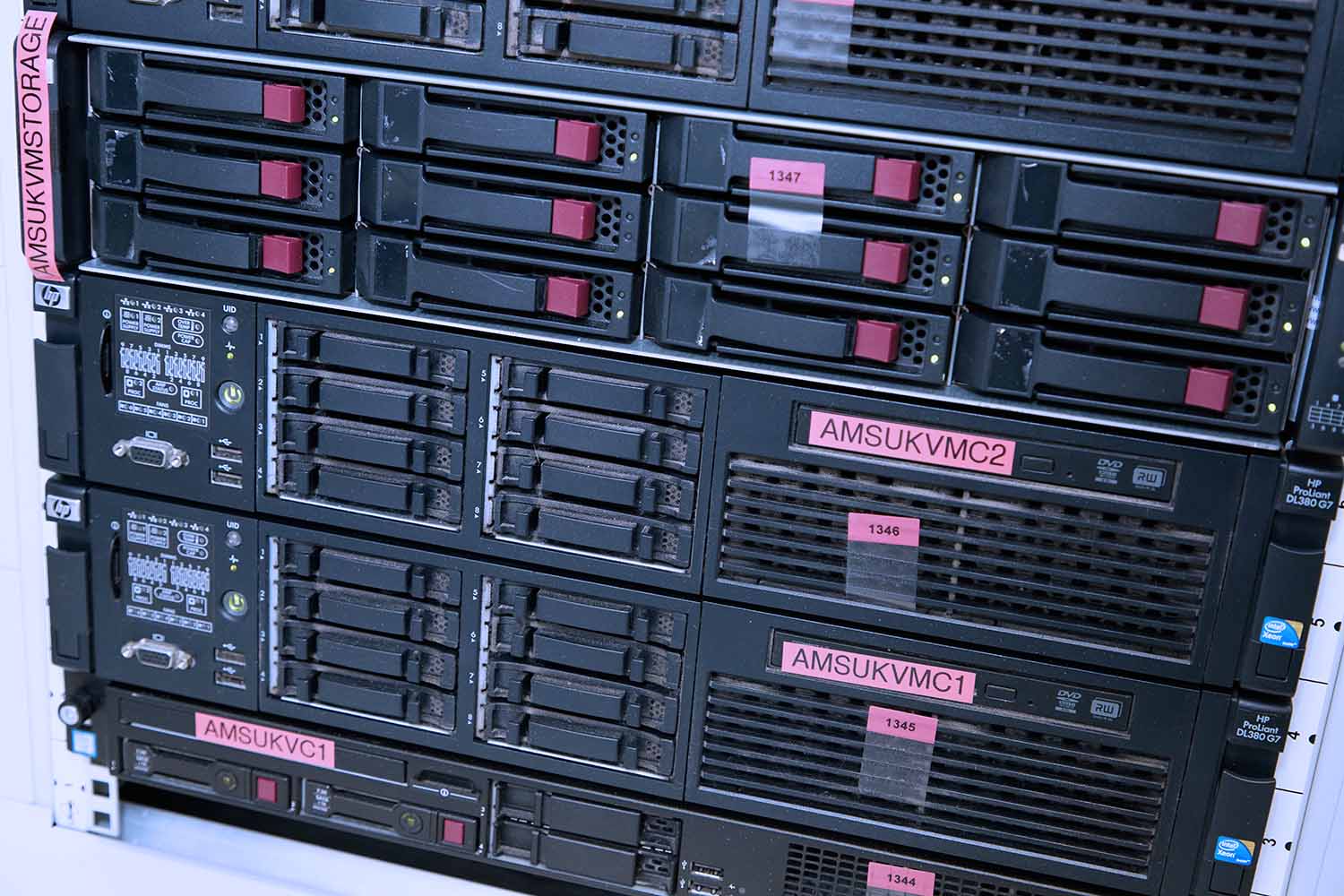
With 30 years of experience providing hosting and connectivity services to UK businesses, Datanet understands the importance of keeping critical systems available. Operating from the highly secure ARK Farnborough data centre, we provide a range of services that can support business continuity and disaster recovery planning.
- Secure Colocation – From shared colocation and ULTRA Third Racks to full 47U racks, businesses can house their equipment in a professionally managed facility with resilient power, cooling and physical security.
- Offsite Backup and Hosting – Our hosting and backup services can help businesses protect important data and reduce their dependence on a single location.
- Virtualisation Solutions – Our Proxmox-based hosting platform provides flexible infrastructure options, with backup and recovery arrangements tailored to individual requirements.
- Connectivity and Technical Support – Reliable connectivity, experienced engineers and Remote Hands services help businesses maintain and support their critical infrastructure.
Is Your Business Prepared for the Unexpected?
No business can eliminate every cyber threat or infrastructure risk. However, having the right backup systems, recovery procedures and hosting arrangements in place can make a significant difference when disruption occurs. Cyber resilience is about more than preventing downtime. It is about ensuring your business has a clear, practical route to recovery. Whether you are reviewing your backup arrangements, considering offsite disaster recovery or looking to move critical infrastructure into a secure UK data centre, Datanet can help.
To find out more about how Datanet can help, call 01252 810010, or email Datanet Sales or simply fill out the form on our contact page and we will be in touch.
#datanetnews
Explore More
Find out more about how Datanet can help your business. We’re here to help.