
Beyond VMware: How Datanet Is Helping Organisations Build Their Next Virtualisation Platform with Proxmox
With VMware licensing changes reshaping the virtualisation landscape, Datanet is helping organisations evaluate and migrate to Proxmox with expert design, storage strategy, and cluster planning.
Datanet News
Date:
17/03/2026
Summary:
With VMware licensing changes reshaping the virtualisation landscape, Datanet is helping organisations evaluate and migrate to Proxmox with expert design, storage strategy, and cluster planning.
#datanetnews

Beyond VMware: How Datanet Is Helping Organisations Build Their Next Virtualisation Platform with Proxmox
Over the past couple of years, the virtualisation landscape has shifted dramatically following Broadcom’s acquisition of VMware. Changes to licensing models and commercial structures have prompted many organisations to reassess their long-term virtualisation strategy, particularly those running on-premises or colocated VMware environments.
In response to changes in VMware Service Provider Licensing, Datanet made the strategic move to transition its own hosting platform to Proxmox VE approximately 18 months ago. Since then, the company has been actively supporting customers who are exploring similar migrations away from VMware.
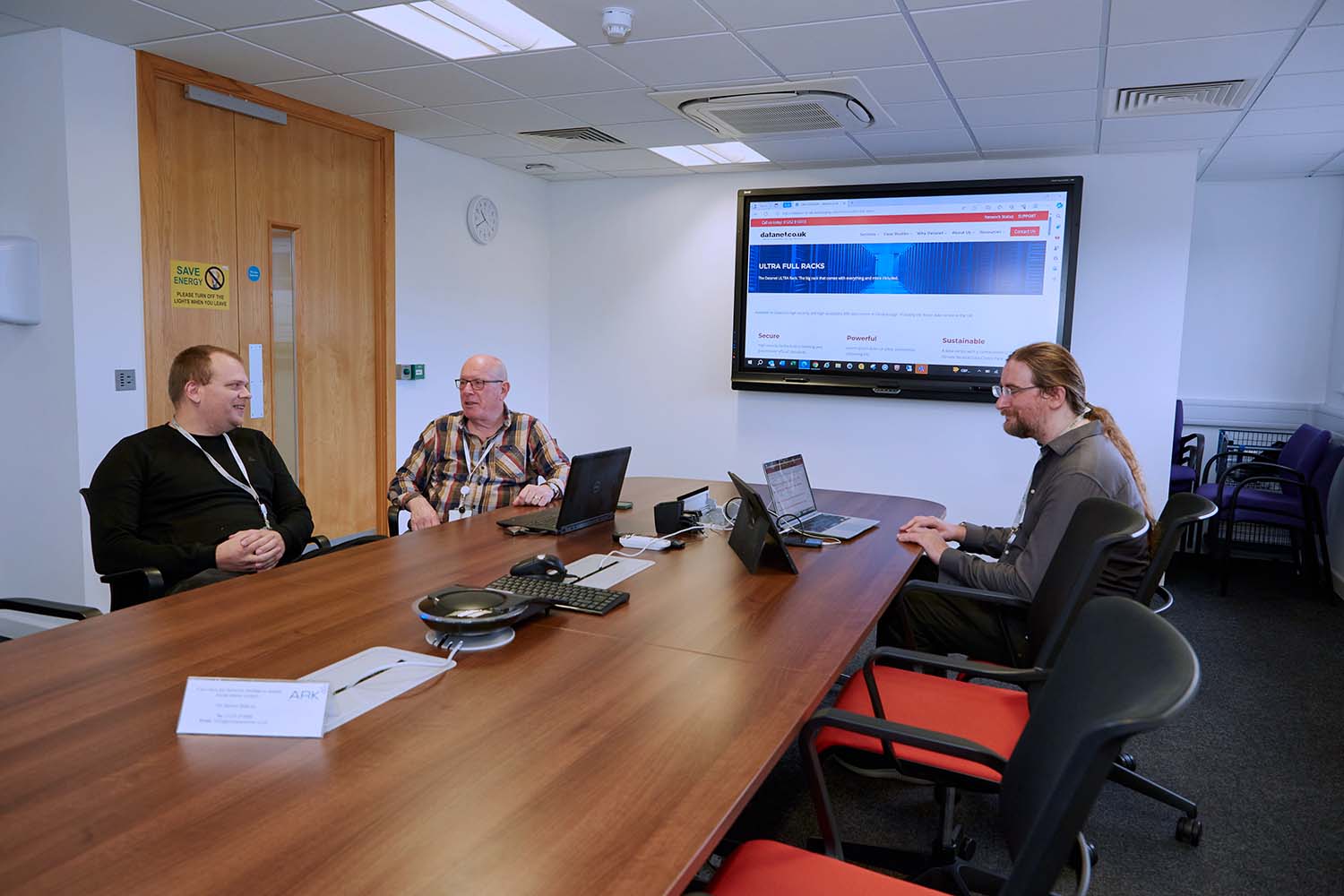
Through tailored workshops, design consultations, and hands on training, Datanet has helped organisations navigate both the technical and operational considerations involved in moving between platforms. These engagements typically focus on architectural redesign, storage strategy, and cluster planning areas where the differences between VMware and Proxmox are most significant.
One of the most common challenges is storage transformation. Many VMware environments rely on iSCSI backed VMFS datastores or VMware vSAN in hyperconverged environments. In Proxmox based designs, customers are evaluating alternatives including LVM, distributed storage with Ceph, or replicated ZFS configurations. Each approach introduces different performance characteristics, resilience models, and operational considerations. Selecting the right storage architecture requires careful assessment of workload requirements, growth projections, and budget constraints
Cluster design is another key area of change. Proxmox quorum requirements and high availability mechanisms often lead to different node sizing and cluster counts compared to VMware deployments. Datanet works closely with customers to reevaluate node specifications, balance compute and storage density, and ensure that new clusters maintain stability, performance, and fault tolerance under Proxmox’s architecture.
The result is not simply a “like-for-like” migration, but an opportunity to modernise infrastructure design. Many customers are discovering that the move away from VMware is less about replacing a hypervisor and more about rethinking platform strategy, cost models, and operational flexibility. With no restrictions on the licensed features sets, as within VMware, many businesses can now take advantage of advanced feature sets previously prohibitively expensive to use with Broadcom’s licensing model.
Datanet can provide tailored professional assistance to businesses evaluating, transition or maintaining a migration from VMware to Proxmox and are in an excellent position to provide managed or unmanaged private cloud based upon Proxmox hosted from within our Farnborough and London data centres.
As the virtualisation market continues to evolve, Datanet remains committed to helping organisations make informed, practical decisions and turning uncertainty into a structured roadmap for sustainable infrastructure transformation.
To find out more about how Datanet can help, call 01252 810010, or email Datanet Sales or simply fill out the form on our contact page and we will be in touch.
#datanetnews
Explore More
Find out more about how Datanet can help your business. We’re here to help.